 ⭐ Featured
Primary school supplies list: the waste-free guide from CP to CM2
Primary School Supplies List: the CP to CM2 checklist, what to keep from last year, what to double up on, and…
Read the article → Memory Tricks & Memorisation · 21 October 2026
CE2 Conjugation: What You Need to Know and Practice Exercises
CE2 Conjugation: the 4 tenses covered this year, all the verb endings in one table, common pitfalls for each tense, and corrected exercises to try this evening.
 Revision Methods · 15 October 2026
Mental Maths CE2: 10 Minutes a Day That Make All the Difference
Mental maths in CE2, age 8-9: what the curriculum says, 7 simple strategies, a 10-minute daily routine and 5 family games to help your child progress without stress.
 Revision Methods · 13 October 2026
Explaining long division to your child, simply
Long division: step-by-step method with the bracket, a full example, common mistakes (like missing out the zero!) and how to check your answer in 30 seconds.
 Parent Guide · 11 October 2026
Children’s screen time: what rules should you set at home?
Official screen time guidelines by age (3-6-9-12, 2024 report), simple rules for home, and tips to switch off without drama.
 Learning Through Play · 9 October 2026
Halloween activities for kids: 12 clever ideas to try at home
Halloween activities for children: 12 easy ideas to do at home (crafts, cooking, games, stories), sorted by age, with a little learning included.
 Parent Guide · 7 October 2026
Bad School Report: How to Respond Without Crushing Motivation
Bad school report: what should you do? Read the comments, talk it over calmly, find the real cause and build a plan of small wins.
 Learning Through Play · 5 October 2026
Educational board games for ages 6-10: our skill-based picks
Educational board games for ages 6-10: our selection by skill (mental maths, words, logic, memory) and tips for turning any game into revision.
 Parent Guide · 3 October 2026
Educational gift ideas: a present they'll still use in March
Educational gift ideas for children: 4 tips to avoid toys that end up forgotten, a selection by type and age, plus inspiration for grandparents.
 Learning Through Play · 1 October 2026
20 indoor games for rainy days (including 8 sneaky revision games)
Indoor games for children on a rainy day: 20 ideas that cost nothing, from calm activities to energetic games, plus 8 clever ways to sneak in some revision.
 Memory Tricks & Memorisation · 8 September 2026
Et or est: the 'was' tip so your child never gets it wrong
Et or est: the 'was' and 'and then' tips explained for your child, checked examples, common traps (like c'est, était, était-ce) and a recap table
 Revision Methods · 26 September 2026
Passé Composé in CE2: Être or Avoir, Past Participles and Simple Agreements
Passé composé in CE2: choosing between être and avoir, finding the past participle of -er verbs and common verbs, and making simple agreements…
 Revision Methods · 25 September 2026
Plural Nouns: The Main Rule and All the Exceptions You Need to Know
Plural nouns: the 's' rule, nouns ending in -al, -ail, -eu, -au, and the 7 nouns ending in -ou that take an 'x' (bijou, caillou…)
 Revision Methods · 12 September 2026
Determiners in CM1: Articles, Possessives, Demonstratives and Common Traps
Determiners explained for parents: articles, possessives, demonstratives, numerals, a clear table and the main pitfalls to avoid
 Revision Methods · 5 September 2026
Word Classes: The 8 Types to Know and How to Spot Them
Word classes: the 8 types taught in primary school explained simply, easy tests to recognise them and common traps to avoid
 Revision Methods · 17 September 2026
Noun Complements: Definition, Examples and How They Differ from Adjectives
Noun complements: definition, how to spot them, sorted examples and the difference with adjectives, to help your child understand.
 Revision Methods · 21 September 2026
COD and COI: The Right Questions to Identify Them Easily
COD and COI: the questions « qui ? quoi ? » and « à qui ? de quoi ? », the pronoun test, corrected examples and common pitfalls.
 Revision Methods · 27 September 2026
Past Participle Agreement with 'Avoir': The Rule Made Simple
Past participle agreement with 'avoir': never with the subject, only with a direct object if it comes before. The rule explained, plus a step-by-step method…
 Memory Tricks & Memorisation · 22 September 2026
Invariable Words in CE2: The List to Learn and 6 Tips to Remember Them
Invariable words in CE2: the list of common words, the spelling trap for each one (toujours, dehors, longtemps…) and 6 ways to memorise them.
 Memory Tricks & Memorisation · 19 September 2026
Grammar Homophones in CM2: The List, Tests and Games That Work
Grammar homophones in CM2: the full list, the test to tell each pair apart, a proofreading method and fun games.
 Memory Tricks & Memorisation · 15 September 2026
Ces or ses: the 'his/hers' and 'these...-là' tips to choose correctly
Ces or ses? If you can say « les siens », it's ses; if you can add « -là », it's ces. Tests, common traps, a clear table and examples to help your child
 Memory Tricks & Memorisation · 10 September 2026
Son or sont: the 'were' and 'my' tips to get it right every time
Son or sont: replace with « étaient » or « mon » and the right word will be clear. Two tests, common traps, a table and a recap for your child
 Memory Tricks & Memorisation · 2 September 2026
A or à: The 'avait' Trick to Never Get It Wrong Again
A or à: how to use the 'avait' replacement trick, correct examples, common pitfalls (il y a, À with a capital…), all explained for your child.
 Revision Methods · 7 September 2026
Reading Comprehension in CE1: Helping Your Child Understand What They Read
Reading comprehension in CE1: questions before, during and after reading, rephrasing, making inferences and activities to help your child
 Revision Methods · 14 September 2026
Reading Fluency: How to Help Your Child Read Smoothly
Reading fluency: what it means and how to practise at home with repeated reading, paired reading and fun activities
 Revision Methods · 21 September 2026
Geometry in CE2: What Your Child Learns and How You Can Help
Geometry in CE2: shapes, solids, right angles, alignment, symmetry and tools. What your child learns and tips to help at home.
 Revision Methods · 13 September 2026
Area of a Rectangle: Understanding L × w and Square Units
Area of a rectangle: why we multiply L × w, how to read cm² and m², how to convert without mistakes and avoid confusion with perimeter
 Revision Methods · 9 September 2026
Perimeter of a Rectangle: The (L + w) × 2 Formula and Worked Examples
Perimeter of a rectangle: the (L + w) × 2 formula explained step by step, checked examples, the right units and the difference from area
 Memory Tricks & Memorisation · 23 September 2026
The 9 Times Table: The Finger Method and Other Tricks That Work
The complete 9 times table, step-by-step finger method, the digits always add up to 9, and the '10 times minus 1 times' trick…
 Memory Tricks & Memorisation · 15 September 2026
The 8 Times Table: Triple Doubling, the Game-Changing Trick
The full 8 times table up to 8 × 10, the triple doubling trick, the two new results, plus games and tips to help your child remember
 Memory Tricks & Memorisation · 4 September 2026
The 7 Times Table: Only One Truly New Result, Plus All the Tips
The complete 7 times table, what your child already knows from other tables, tips for 7 × 7 and 7 × 8, plus games and tricks to help remember
 Learning Through Play · 20 September 2026
Games to Learn Times Tables: 8 Ideas for Home
Games to learn times tables: battle, memory, dice, hopscotch… 8 screen-free ideas to play as a family, with printable cards.
 Memory Tricks & Memorisation · 11 September 2026
How to Learn Times Tables: Order, Method, Tips
How to learn times tables without tears: the best order, a tip for each table and a 10-minute daily routine
 Revision Methods · 16 September 2026
Decimal Fractions: Tenths, Hundredths and Decimal Numbers in CM1-CM2
Decimal Fractions in CM1-CM2: tenths, hundredths, how they link to decimal numbers, common mistakes and practical activities
 Revision Methods · 6 September 2026
Fractions in CM1: How to Help Your Child Understand Them
Fractions in CM1 explained for parents: numerator, denominator, pie slices, paper strips, number lines and simple activities to try at home
 Revision Methods · 9 September 2026
Mental Maths in CE1: 6 Strategies and Games for Family Practice
Mental maths in CE1: complements to 10, doubles, +9 and crossing tens explained simply, with dice games and tips for home practice
 Revision Methods · 3 September 2026
Mind Maps: How to Help Your Child Learn
Mind mapping explained for parents: how to create one with your child, a real lesson example, and practical tips.
 Revision Methods · 4 September 2026
Mental Maths CM1: 7 Strategies and a 10-Minute Daily Routine
Mental Maths CM1: the 7 key strategies (breaking down, compensating, × 25…), worked examples, and a 10-minute daily routine.
 Study Methods · 18 August 2026
The Pomodoro Method for Children: Study in 10-Minute Bursts
The Pomodoro Technique for Kids: best block length by level, which timer to use, and a sample homework session…
 Study Methods · 14 August 2026
The syllabic method for learning to read: why it’s making a comeback
Phonics Method for Learning to Read: how it differs from the whole-word approach, what official guidelines say, and…
 Memory Tricks & Recall · 12 August 2026
English spelling and grammar tricks for kids: the mnemonics that stick
Their, there or they’re? Because, necessary, i before e: the spelling mnemonics that help children aged 6 to 11…
 Memory Tricks & Recall · 10 August 2026
How to memorise a lesson (and remember it for the test)
A 5-step method to learn a lesson by heart, from CP to CM2: understand, break it down, recite with the book closed, test yourself…
 Memory Tricks & Recall · 9 August 2026
Visual or Auditory Memory in Children: What Really Works
Visual or Auditory Memory in Children: what research actually says, why labels can be unhelpful, and how to support your child…
 Memory Tricks & Memorisation · 6 August 2026
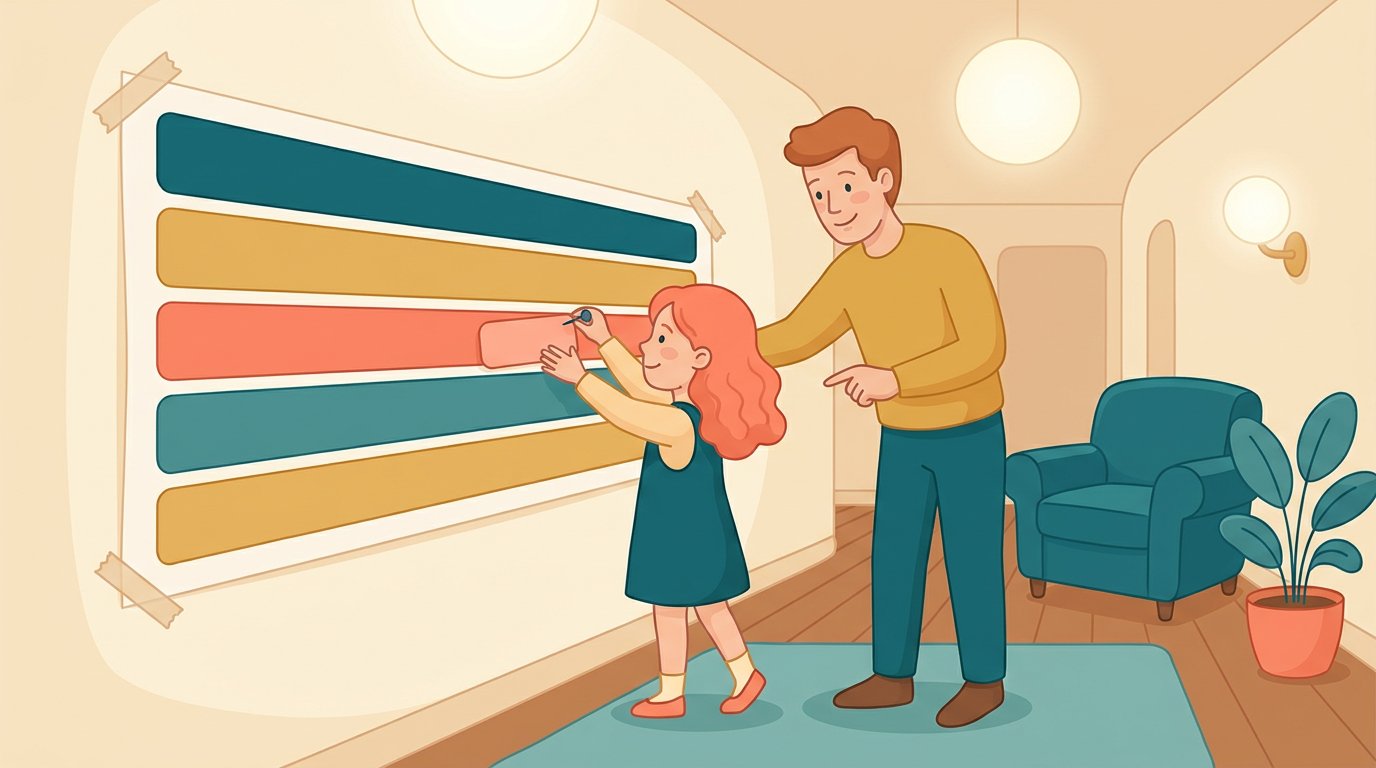
How to remember history dates: timelines, stories and mental images
How to Remember History Dates without endless repetition: mental images, storytelling, the hallway timeline, and 12 key dates…
 Memory Tricks & Recall · 6 August 2026
Homophones: tricks to stop mixing up their/there/they’re, your/you’re and its/it’s
Their, there or they’re? Your or you’re? Its or it’s? The swap test that works every time, a table to pin up…
 Memory Tricks & Recall · 2 August 2026
English verbs for kids: 7 tricks for tenses that really work
Verbs without tears: the -s of he/she/it, was or were, did or done, irregular verbs in sound families…
 Memory Tricks & Recall · 30 July 2026
Tricky words: the list from age 5 to 11 and 6 ways to remember them
Tricky words: the list by age from 5 to 11, the traps to highlight, and 6 simple ways to remember them…
 Learning Through Play · 22 July 2026
15 games to keep children busy in the car (that make them think)
15 car games to keep kids busy, almost no equipment needed: classics and clever games that help revise key skills
 Back-to-School Prep · 18 July 2026
Preparing to start 6e (first year of middle school in France): the calm parents' guide for CM2
Preparing for 6e without stress: what changes after CM2, the summer checklist, building independence, and new routines
 Back-to-School Prep · 16 July 2026
Preparing for entry into CP during the summer: the 7 real priorities
Preparing for CP without cramming: the 7 real priorities for summer, what’s learned in class, and a 10-minute daily ritual
 Holiday Workbooks · 15 July 2026
How much time per day on a holiday workbook? The right amount by age
How much time per day on a holiday workbook? The best durations by age, from Kindergarten (age 5-6) to CM2, and why regularity matters
 Holiday Workbooks · 12 July 2026
Free printable Kindergarten summer workbook: prepare for CP without pressure
Free printable Kindergarten (age 5-6) holiday workbook in PDF, no email needed: letters, sounds, numbers, handwriting… plus our tips for a smooth start to CP
 Holiday Workbooks · 12 July 2026
Free printable CE2 summer workbook: the summer of multiplication tables
Free printable CE2 holiday workbook in PDF, no email needed: times tables, reading, grammar, telling the time and money. The smart summer plan
 Holiday Workbooks · 12 July 2026
Free CE1 summer workbook to print: heading towards CE2
Free printable CE1 holiday workbook in PDF, no email needed: reading fluency, present tense, times tables, written calculations… the clever summer plan
 Parent Guide · 7 July 2026
The "summer slide": why your child forgets, and what to do
Learning loss over the school holidays isn’t inevitable: here’s how to prevent it in just 10 minutes a day…
 Summer Workbooks · 7 July 2026
Vacation workbook: how to choose it well, class by class (Kindergarten → CM2)
Level, length, answer keys: the 5 things to look for in a summer workbook that truly suits your child, class by class…